Written by Richard Hopkins
Before The Hollies: woodland and Roman Wanstead
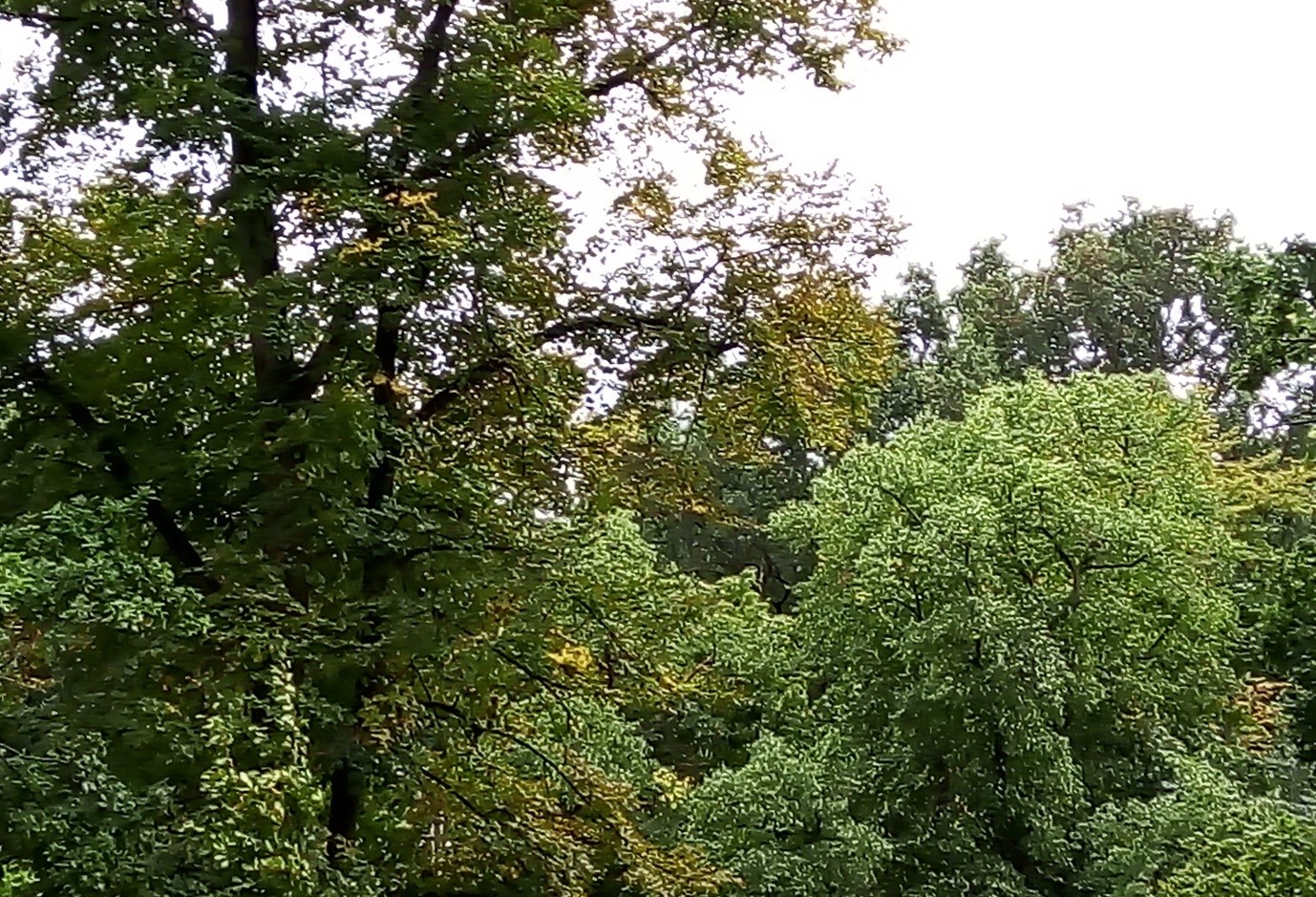
In the beginning there was woodland. Until about two hundred years ago, the site of The Hollies—and much of Wanstead—was covered by broadleaf woods. Oaks were the largest trees, as they remain today, and a surviving patch of that landscape still stands directly opposite The Hollies.
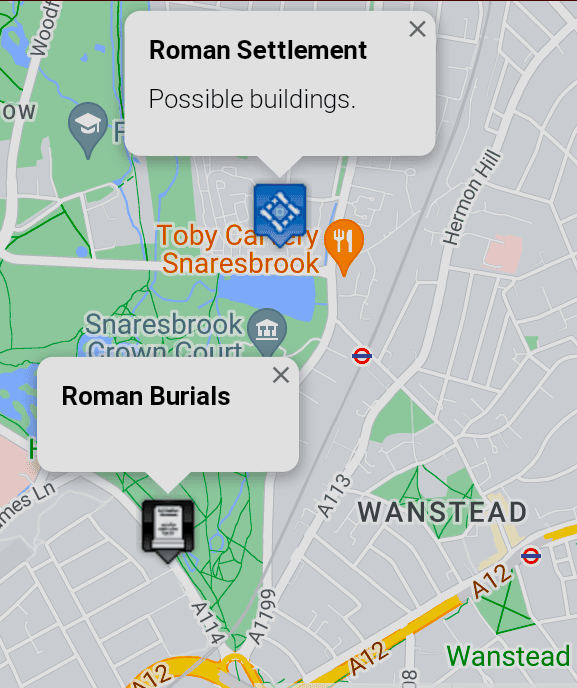
Jump forward to the Roman period, approximately 1–450 CE, and the area was still almost entirely a sea of trees. Only a few small clearings had been made. Archaeologists have found a variety of Roman remains, and Wanstead Park may once have been the site of a Roman villa.
Forest tracks probably connected with Roman roads, including the main London-to-Colchester route, which followed roughly the same line as today’s A12. Even so, woodland remained the defining local feature long after the last Roman soldiers had left the province they called Britannia.
A wooded landscape on the edge of change
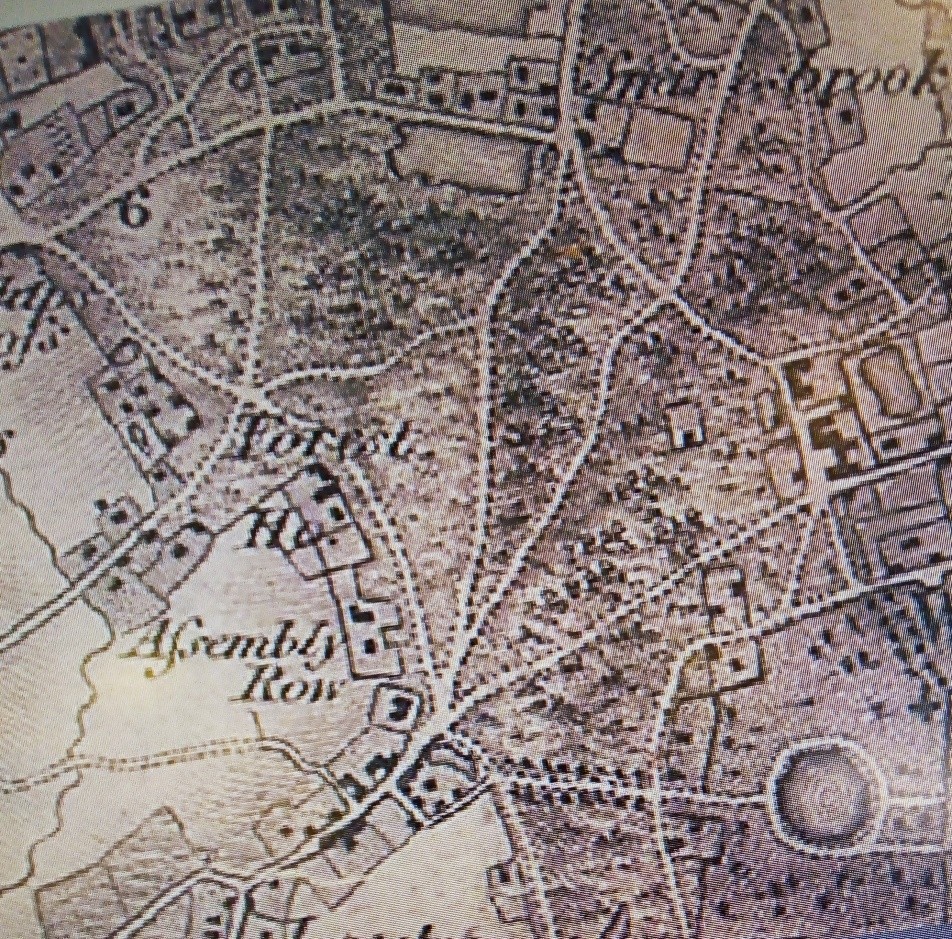
Wanstead was still predominantly wooded in 1800. On a map from around that date, the routes of New Wanstead and Hermon Hill (A113), and Hollybush Hill (A1199), appear as cuttings through the trees. Eagle Pond is visible, but Wanstead High Street has not yet been lined with houses and shops. The future site of The Hollies remains woodland where two tracks meet and cross.
The railway arrives
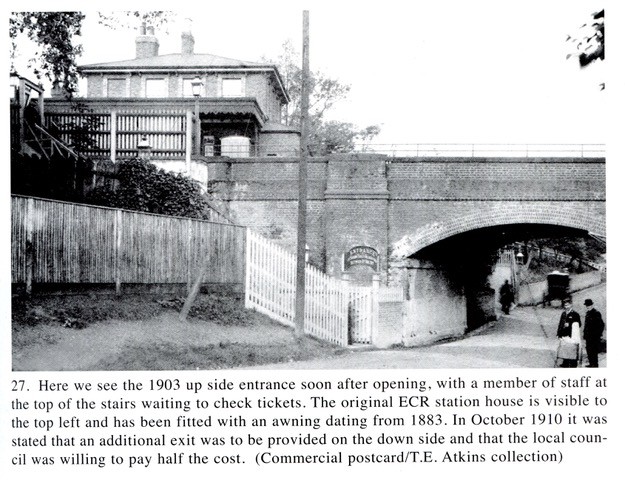
Everything changed in 1856, when the Eastern Counties Railway extended its line from Liverpool Street, adding a branch from Stratford to Loughton. Because the route passed between Snaresbrook and Wanstead, a station serving both villages formed part of the development. Snaresbrook Station opened to steam trains on 22 August 1856.
Wanstead village expanded towards the station. The railway company renamed it “Snaresbrook for Wanstead” in 1857, “Snaresbrook and Wanstead” in 1898, and “Snaresbrook for Wanstead” again in 1929. In 1947, when the Central line’s loop extension opened with a new Wanstead Station at the other end of the High Street, the station behind The Hollies became Snaresbrook Station once more.
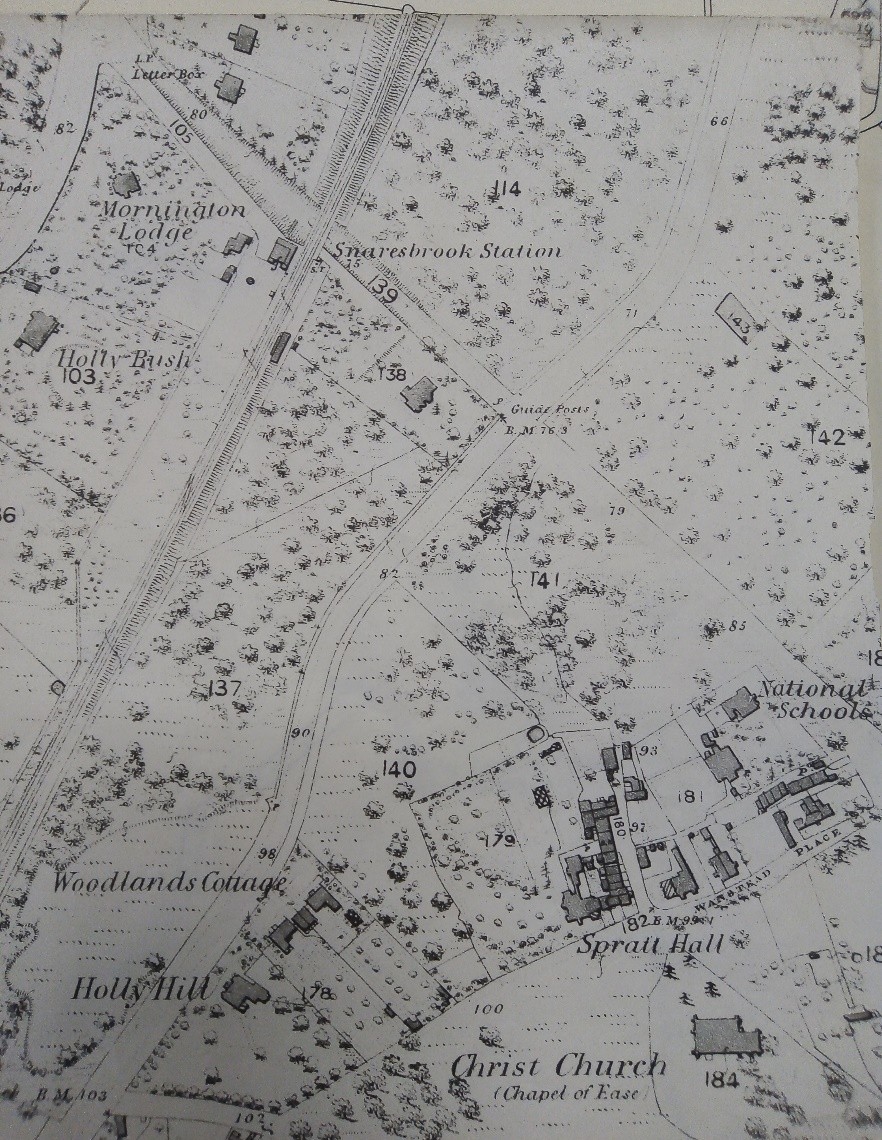
The effect of a direct train service into London is clear on the Ordnance Survey map based on surveys made in 1862–63. Three large residences had appeared within an easy walk of the station: Holly Bush House, Mornington Lodge and The Hollies, marked 138. Each villa stood in woodland and had extensive grounds.
Mornington Lodge—later Holly Lodge and now Kingsley Grange—was designed in the fashionable mid-19th-century gabled-cottage style. It survives as flats, although its grounds have been built over. Holly Bush House also became flats and lost its grounds; its Italianate architecture has been heavily altered.
The original Victorian house
The original country villa called The Hollies retained its grounds, but the house itself was demolished and replaced by the present apartment building, which kept the same name. This happened in the mid-1960s. Developers first received permission for two blocks of flats; a later application approved the current single block of 34 flats.
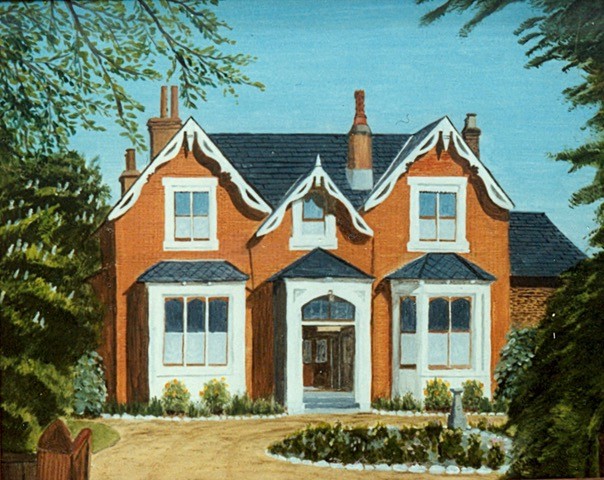
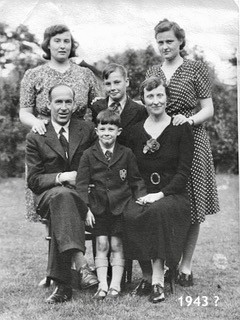
Photographs of the old house were kindly supplied by Ken and Keith Madgwick, who lived there as children with their parents and two older sisters.
Its gabled cottage-style architecture resembled Mornington Lodge, although the Madgwick family’s recollections show that it was a substantial residence. It was both a family home and a doctor’s practice, important enough to have its own telephone number: 4700. Kelly’s Directory for 1955 listed the address as The Hollies, 1 New Wanstead.
The morning room, to the left of the front door, was divided into a waiting room, surgery and small dispensary where medicines were prepared. The garden combined ancient forest oaks with decorative species. A Cedar of Lebanon dominated the back garden; the remains of its stump survive at the centre of today’s circular rose garden. A tennis court stood approximately where Flat 2 now sits.
An OS map published in 1896, based on surveys made in 1893, shows the house’s footprint unchanged from 1862. By the 1914–15 revision, an extension had been added on the Wanstead High Street side—the same extension visible to the left of the photograph.
The revised map shows the driveway opening onto Wanstead High Street, a detail confirmed by later OS maps held by Redbridge Archives and by documents that gave the address as The Hollies, High Street, Wanstead, Essex. By the 1950s, however, the address was consistently given as New Wanstead.
The families who lived at The Hollies
Records identify at least three successive households at the original house between the mid-19th and mid-20th centuries.
John Henry Nettleship and family
John Henry Nettleship and his family were the first known occupants. Nettleship was Superintendent of the Great Eastern Railway Company—the senior operational manager responsible for the entire railway—so a station in his home’s “back garden” was especially convenient.
Superintendents also travelled on the Royal Train whenever it used their company’s tracks, ensuring every aspect of Queen Victoria’s journey was safe and secure. The 1881 census records Nettleship, his wife Jane, two sons and two daughters, aged between 13 and 20, together with a 21-year-old cook and a 31-year-old housemaid.
When Nettleship died in 1897, the Chelmsford Chronicle reported that he left £13,961—more than £1 million in today’s money. Jane had died in 1892 and their children were adults. The records then fall silent for twenty years; members of the family may have remained until the house was finally sold.
Dr William and Dr Dorothy Keats
The next known residents were Dr William John Charles Keats and his family. Born in 1867, he qualified as both physician and surgeon. After beginning at Barts Hospital as a junior house physician, he became Assistant Medical Superintendent at Greenwich Union Infirmary and later Medical Superintendent of Camberwell Infirmary. He also served for a time as president of the Infirmary Medical Supervisors Society. The Medical Directory places him at The Hollies from 1917 to 1935.
Keats married twice. His first wife, Eliza Jane Ennis, appears to have died young. In 1917, aged 50 and newly arrived in Wanstead, he married Dorothy Elcock. Dorothy Lila Mabel Keats qualified as a doctor in 1924—an exceptional achievement when women doctors were still rare and the idea remained socially contested.
Newspaper advertisements offer glimpses of their household. In the Essex Newsman of 24 March 1917, Mrs Keats sought a “cook-general” at £40 a year, describing a doctor’s house with a parlourmaid and a boy kept. Further advertisements for cooks appeared in 1919, 1923, 1925 and 1930, suggesting that domestic staff were difficult to retain.
Dr William Keats also appears in newspapers and court records as an expert witness. Alongside his anaesthetic work at the Walthamstow, Wanstead and Leyton Children’s and General Hospital, he served as police surgeon for J Division of the Metropolitan Police.
Dr Rupert Madgwick and family
After a gap in official records, Dr Rupert Alexander Madgwick took a lease on The Hollies in 1937. The family moved in that autumn after alterations and renovations were completed.
The government’s 1939 Register records four people at the house: Rupert, his wife Mary—also known as Lily—and two women, Fanny, listed as a nurse, and Laura, listed as a servant. Fanny and Laura left shortly after war began in late 1939.
The Madgwick boys, Ken and Keith, do not appear in the Register because they had been evacuated to their maternal grandparents in Northern Ireland. Their older sisters, Moira and Maureen, were evacuated to Bedford with their entire school, Woodford County High School for Girls.
The Hollies during the Second World War
Snaresbrook Station and its brick-arch railway bridge, immediately behind The Hollies, were significant targets for German bombers. Later, when rockets replaced bombers, an Anderson shelter was installed in the garden for protection from explosions and shrapnel. The family used it from time to time, and blasts from nearby explosions blew out windows at both the house and station.
Ken and Keith remembered collecting anti-aircraft shrapnel and playing on a rope swing hung from an ancient Epping Forest oak. Their father kept chickens and bees between seeing patients. The government encouraged beekeeping to support crop pollination, while honey provided a welcome supplement to wartime rations.
The house, family, station and brick bridge survived the war despite several close misses. Soon afterwards the present steel-girder bridge was erected. Italian and German prisoners of war built the red-brick retaining walls while awaiting repatriation; Mrs Madgwick, sympathetic to their situation, brought them cups of tea.
Rupert Madgwick qualified as both physician and surgeon. The Medical Register gave two addresses: The Hollies, High Street, Wanstead, and Balmoral House, Balmoral Road, Forest Gate. Forest Gate was his main practice for morning and evening surgeries, while The Hollies hosted weekday afternoon consultations.
He was born in Dominica, in the British West Indies, where his father worked as a merchant. Sent to England to complete his education and medical training, Rupert appears on the passenger manifest of a ship sailing from England to Barbados in 1922. By 1925 he was permanently back in England and practising in Forest Gate.
From family home to apartment block
Mary “Lily” Madgwick died at The Hollies in 1959. By then, Ken and Keith had both qualified as doctors and moved away. Rupert remarried in 1961, but his second wife, formerly Gladys Lofthouse, lived at The Hollies only briefly. By 1964, his Medical Register address was 89 Warren Road, Wanstead. The family’s lease ended, and the old house was soon sold and demolished.
An eventful beginning for the new building
The new block of flats had a dramatic start. Squatters protesting against housing shortages occupied the building. In December 1968, the Illustrated London News reported that placard-bearing demonstrators had taken over the roof. The story spread at least as far as Nottingham, where the Nottingham Guardian reported that police had been called to manage the crowd gathered outside to watch the squatters.
Things have quietened down since—but the site’s story, from ancient oak woodland to Victorian villa, wartime surgery and modern apartment block, remains embedded in the history of Wanstead.